November 17, 2025|
 |
|
 Fully Hong
In high-performance embedded product development using Cortex-A class SoCs, starting entirely from scratch requires tremendous effort — from PCB layout and hardware debugging to system stabilization and final mass production. This path not only brings significant technical challenges but also risks costly PCB redesign cycles, which could cause missed market windows.
Fortunately, the industry already offers more mature solutions: leveraging proven Single Board Computers (SBCs) or System-on-Modules (SoMs) for secondary development. These options allow developers to bypass complex low-level hardware work and jump straight into product definition and application development. However, many still face a dilemma: Should we choose a feature-rich, plug-and-play SBC to speed time-to-market, or a flexible, cost-efficient SoM that allows hardware customization? To answer this question, we must first clarify the fundamental differences between SBCs and SoMs.
What Are SBCs and SoMs?
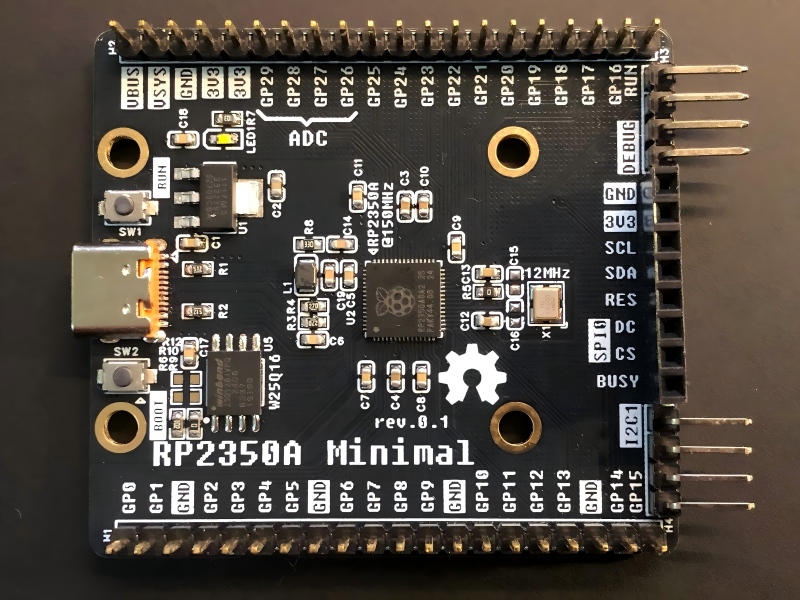
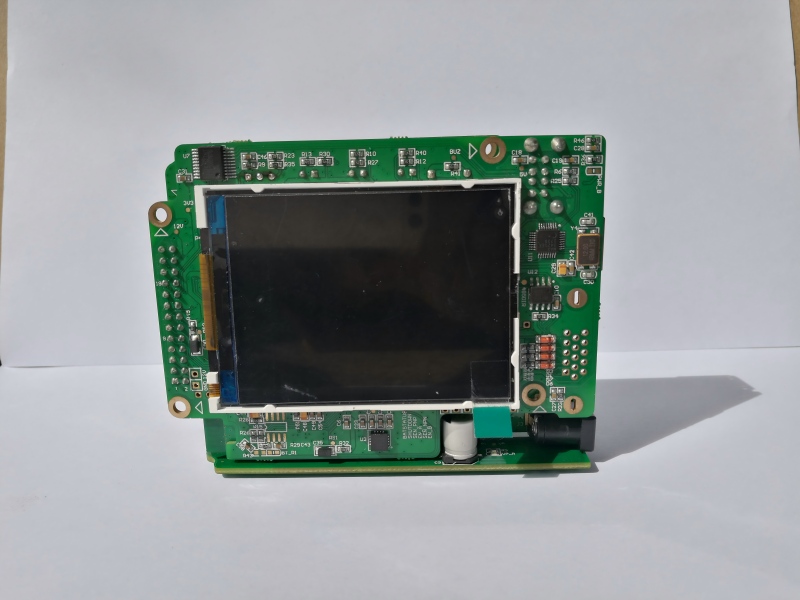
An SBC is a fully integrated computing system that brings together the CPU, memory, storage, power management, and interfaces (USB, Ethernet, HDMI, Wi-Fi, etc.) all on a single circuit board. It can independently run an operating system (Linux, Android, etc.) without requiring additional hardware.
Typical Examples: Raspberry Pi, BeagleBone, Advantech industrial SBCs, Tronlong RK3562 industrial SBC.
Key Features:
✅ Plug-and-play: Preloaded with OS and drivers, no extra hardware design needed.
✅ Rich interfaces: Integrated USB, HDMI, Ethernet, GPIO, and more for rapid prototyping.
✅ Certifications ready: Many industrial SBCs are pre-certified (CE, FCC, RoHS), saving compliance costs.
❌ Limited expandability: May lack high-speed PCIe or specialized sensor interfaces without add-on boards.
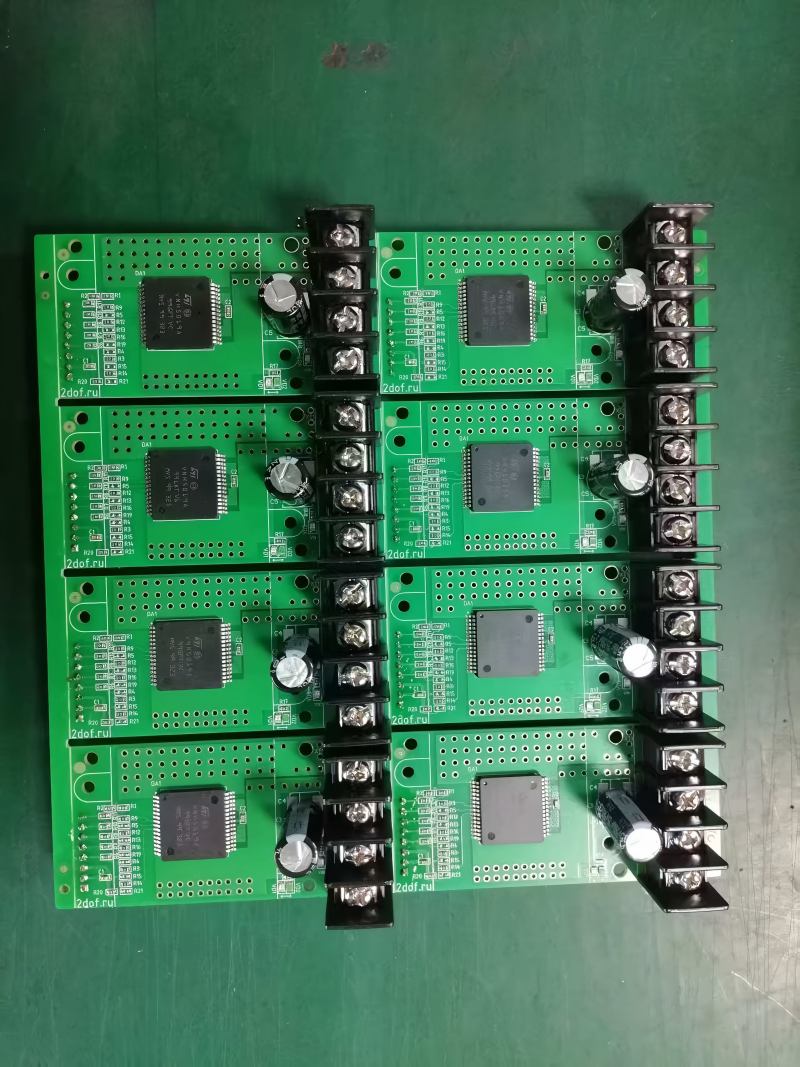
A SoM is a stripped-down computing module that typically integrates only the CPU, memory, storage, and power management. It lacks complete peripheral interfaces and connects to a custom carrier board through board-to-board connectors (stamp holes, edge fingers, etc.), with the carrier providing application-specific interfaces (USB, Ethernet, display, etc.).
Typical Examples: NXP i.MX SoMs, TI AM6x SoMs, ST STM32MP1 SoMs, Tronlong RK3562 SoM.
Key Features:
✅ High flexibility: Custom carrier boards allow tailored interfaces for diverse applications.
✅ Optimized for mass production: Core module reused across projects, carrier customized for cost reduction.
✅ Industrial-grade reliability: Tested for temperature, vibration, and EMC, suitable for demanding environments.
❌ Higher development complexity: Requires custom carrier design, PCB layout expertise, and signal integrity analysis.
❌ Longer development cycles: More time needed for hardware design and driver adaptation.
| Dimension | SBC (Single Board Computer) | SoM (System-on-Module) |
|---|---|---|
| Hardware Design | Ready to use, no extra design required | Custom carrier board needed |
| Software | Preloaded OS and drivers | Requires adaptation for custom board |
| Compliance | Typically pre-certified (CE/FCC, etc.) | Carrier board requires certification |
| Development Cycle | Fast (days to weeks) | Longer (weeks to months) |
| Cost | Higher per-unit, ideal for small volume | Lower long-term cost in large volume |
| Best Use Cases | Prototyping, education, light industry | Industrial, medical, automotive, mass production |
✔ Rapid prototyping (university projects, startups validating MVPs).
✔ Rich interface needs (HDMI, USB, Wi-Fi, Ethernet).
✔ Small production runs (hundreds of units).
✔ No in-house hardware design team.
Typical Applications:
Smart home prototypes (smart plugs, thermostats).
Industrial site monitoring (basic sensor collection).
Educational labs (Linux/embedded system training).
✔ Highly customized designs (industrial, medical, military applications).
✔ Large-scale production (10,000+ units annually).
✔ Industrial-grade reliability (wide temperature range, vibration, EMC compliance).
✔ Strong hardware engineering team.
Typical Applications:
Industrial automation (PLCs, robotics).
AI edge computing (industrial vision inspection).
Medical devices (portable diagnostic instruments).
Automotive electronics (dashboards, ADAS computing).
You need quick prototyping, low-cost validation, and standard interfaces.
Your project won’t reach large-scale mass production, or you lack a hardware team.
You want to focus on software (algorithms, system integration) instead of hardware design.
Our Support:
Even with SBCs, Fully Hong offers complete plug-and-play services — from SBC selection consulting (industrial-grade, low-power optimization) to fast prototyping (Linux/Android tuning, sensor integration). Our experts can help you build a working prototype within 3 days, letting you focus on core functionality and market validation.
You need custom interfaces (MIPI cameras, PCIe, special sensors) or industrial-grade specs.
Your product targets mass production, and you want cost optimization.
You have hardware engineering resources to design and optimize a custom carrier.
Our Support:
Fully Hong provides a comprehensive SoM product portfolio (NXP i.MX, TI AM6x, Tronlong RK3562) along with consulting and production optimization. We assist with schematic reviews, PCB layout guidance, and EMC pre-testing to reduce redesign risk. From prototype to mass production, our supply chain and technical support cut total costs by 30% and shorten development cycles by 50%.
Whether you choose SBCs or SoMs, Fully Hong is more than a supplier — we are your trusted technical partner from prototype to mass production.
For SBC Projects: Quick validation, CE/FCC-certified solutions, software integration, and low-cost expansion boards.
For SoM Projects: Tailored module selection, carrier board co-design, hardware optimization, and full lifecycle support.
Don’t let hardware decisions delay your success. Partner with Fully Hong to unlock the fastest path from concept to reliable embedded products.
 Add: 803-804, Hisee International Commercial Center, Dongbin Road, Nanshan District, Shenzhen, China
 Tel: 0086-755-2664 8283
 E-mail: info@fully-hong.com


Copyright ©2025 Fully Hong Electronics Co.,Ltd. |A Professional And Reliable EMS/PCBA Partner.

 Previous